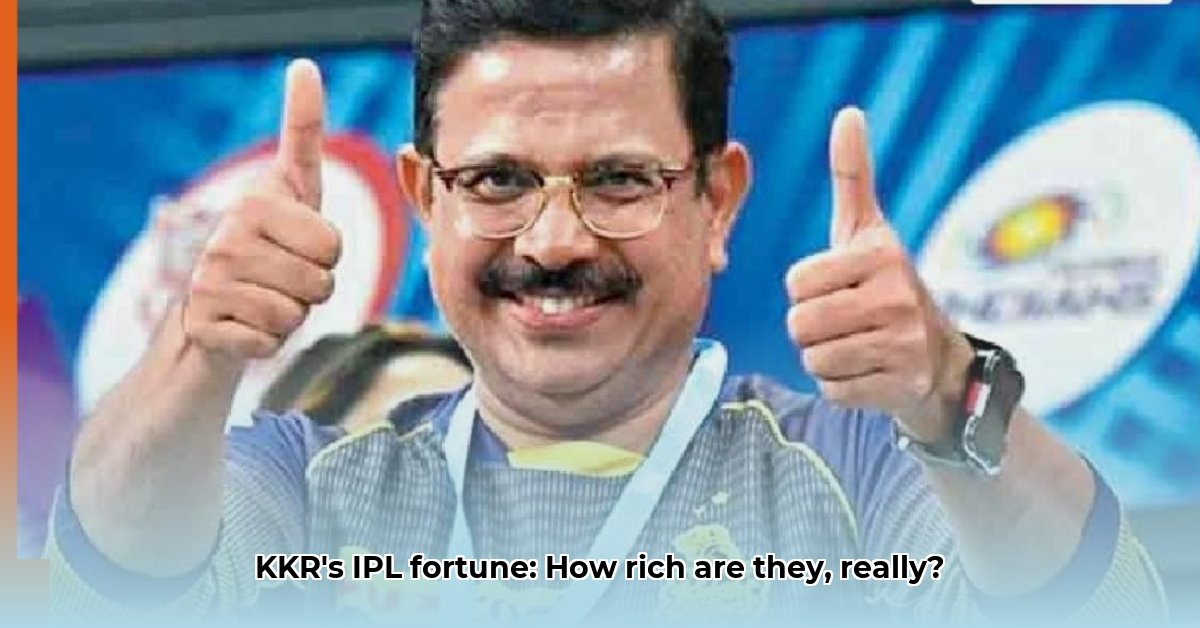
The Kolkata Knight Riders (KKR) are more than just a cricket team; they're a powerful brand in the lucrative Indian Premier League (IPL). This article delves into the financial success of KKR, exploring its revenue streams, ownership structure, and future prospects. We'll examine how shrewd management and strategic partnerships have propelled KKR to its current impressive valuation, estimated at a staggering 740 crore INR. This analysis will reveal the factors driving KKR's financial prowess and provide insights into its potential for continued growth.
From Bold Investment to Brand Powerhouse: The KKR Journey
KKR's story began in 2008 with a significant investment of $75.09 million. This wasn't merely a financial transaction; it was a strategic move by Shah Rukh Khan, Juhi Chawla, and Jay Mehta, a trio combining entertainment prowess and business acumen. Khan's global stardom instantly amplified KKR's visibility, attracting sponsors and fans. This initial investment paid off handsomely establishing a strong foundation for future financial success and brand building within the IPL ecosystem. How did this initial investment translate into a brand valued at a reported 740 crore INR? Let’s explore the business models that fueled such impressive growth.
Revenue Streams: A Multi-Faceted Approach to Financial Success
KKR's financial health isn't solely dependent on on-field victories; it's built on a diverse portfolio of revenue streams. The IPL's massive media rights deals, such as the recent 2023-2027 agreement worth a staggering INR 48390 crore, contribute significantly, likely accounting for 40-50% of KKR's income. But the team's income extends beyond broadcasting; sponsorships, merchandise sales, and gate receipts from home games all play vital roles. This diversified approach mitigates the risk of reliance on any single income source, providing the franchise with financial stability and the capacity for further expansion. Is this diversified approach sustainable in the long run? Let's delve deeper.
Ownership Structure: The Synergy of Star Power and Business Acumen
The unique blend of Shah Rukh Khan's global brand recognition, Juhi Chawla's business expertise, and Jay Mehta’s strategic vision has been crucial to KKR's success. Khan's immense popularity – his personal brand estimated at ₹6300 crores – undoubtedly attracts sponsors and boosts KKR's market value. Chawla and Mehta’s experience in managing the business aspects of the team provides the necessary financial stability and strategic direction that fuels KKR’s success. This unique combination of star power and business acumen demonstrates a synergistic approach rarely seen in sports franchises. What lessons can other sports teams learn from this highly effective organizational structure?
Financial Performance: A Winning Formula on and Off the Field?
While exact profit figures remain confidential, KKR's substantial valuation and diverse revenue streams indicate a strong financial position. A compelling correlation exists between on-field success and financial health: victories translate into increased brand value, attracting more sponsors and fans, and ultimately amplifying revenue. This relationship isn't about simple cause and effect; it involves complex interactions between marketing, sponsorships, and the team's overall brand image. This positive feedback loop illustrates how athletic success drives financial growth. How can we better quantify this link?
Navigating the Challenges: Risks and Mitigation Strategies
Despite its success, KKR faces challenges. Its substantial dependence on IPL media rights creates vulnerability; a downturn in media values could impact its financial position. To mitigate this risk, KKR likely focuses on diversification – exploring investments beyond cricket, leveraging its brand for endorsements, and potentially expanding its global reach through international partnerships. Maintaining on-field competitiveness is critical; poor performance could negatively impact sponsorships and fan engagement. Diversification and robust team management are crucial for maintaining financial stability and long-term growth. What other diversification strategies might KKR pursue?
Future Projections: Sustaining Success in a Dynamic Landscape
KKR's future appears promising. Its strong brand, celebrity ownership, and diversified revenue streams position it for continued success. However, proactive adaptation is needed. Expanding into new revenue streams, such as digital platforms and global partnerships, is key to maintaining a competitive edge. Strong fan engagement through innovative marketing and community building will be essential to sustain growth in the long term. KKR's journey shows that building a successful sports franchise requires more than just athletic prowess; it demands a comprehensive strategy that blends business acumen, strategic partnerships, and a commitment to long-term brand building. How might KKR leverage data analytics to optimize its fan engagement strategies and enhance its revenue streams?
Key Takeaways:
- KKR's success demonstrates the importance of a diversified revenue model in the IPL.
- The synergy between celebrity ownership and strategic management is critical to financial health.
- Maintaining on-field competitiveness is essential for sustaining long-term financial growth.